
The Style Hack Which Transformed How I Get Dressed: The Base Theory
The easiest system you can follow to create a striking outfit every. single. day

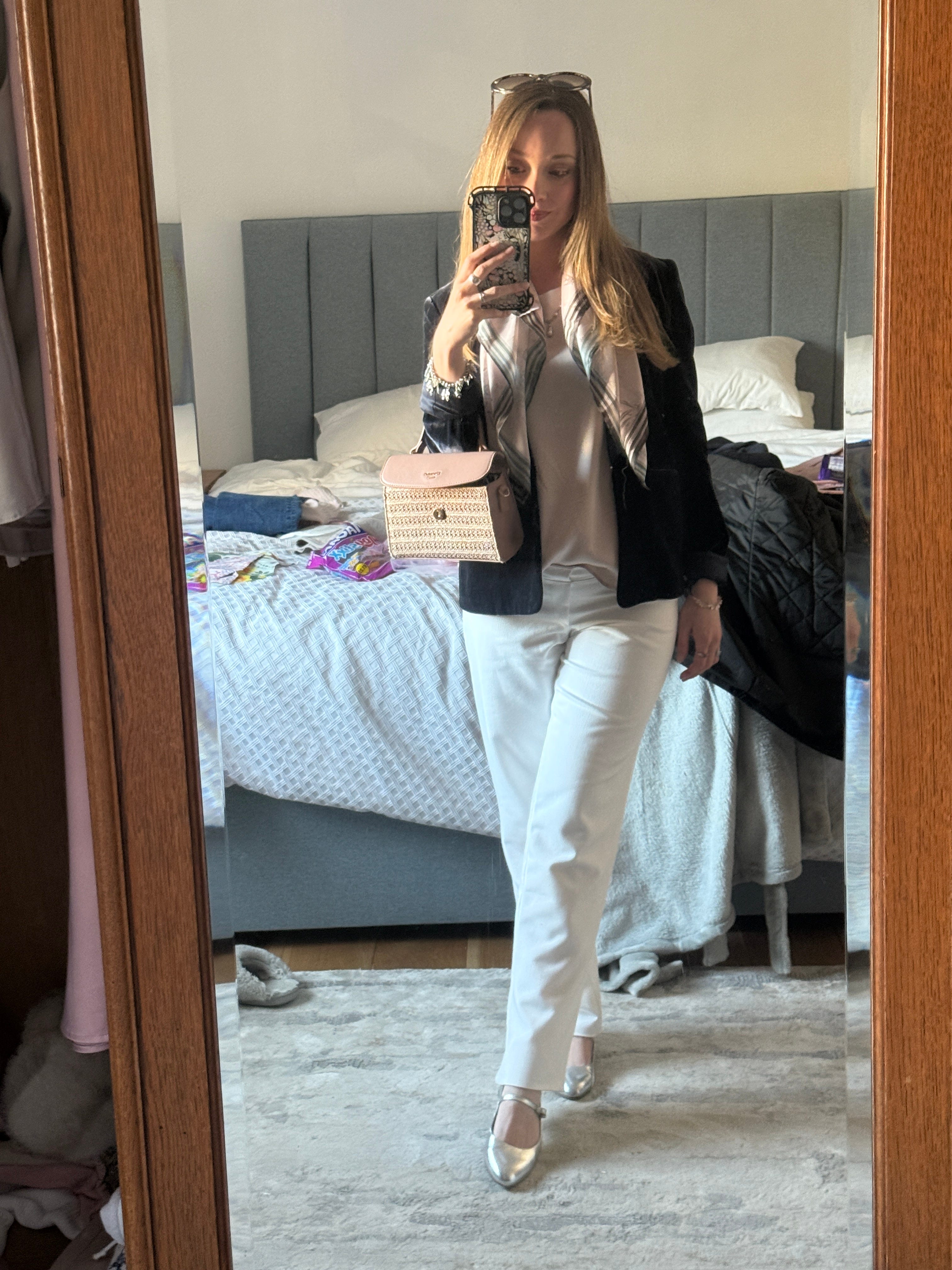
I have always loved the idea of outfit uniforms and templates but often get overwhelmed by the sheer number of possibilities. I always give up on the idea as my style is just way too versatile to be reduced to a few templates - I am not designed for that kind of restriction.
However, this week I discovered an idea which completely transformed the way I think about the outfit template. Anna Newton’s post on her five outfit bases got the gears ticking in my brain: what would my bases be?

The idea of reducing your templates to your base, and swapping out anything you add on top, unlocked something for me. Bases are easy system to incorporate into my getting dressed routine as a simple first step, with the other elements bouncing of this first bit. This splits the outfit into two phases, making it easy to perfect each one. So often I see people end up with a mish mash where they have thrown together random pieces they like; focusing on your base first makes cohesion a lot easier.
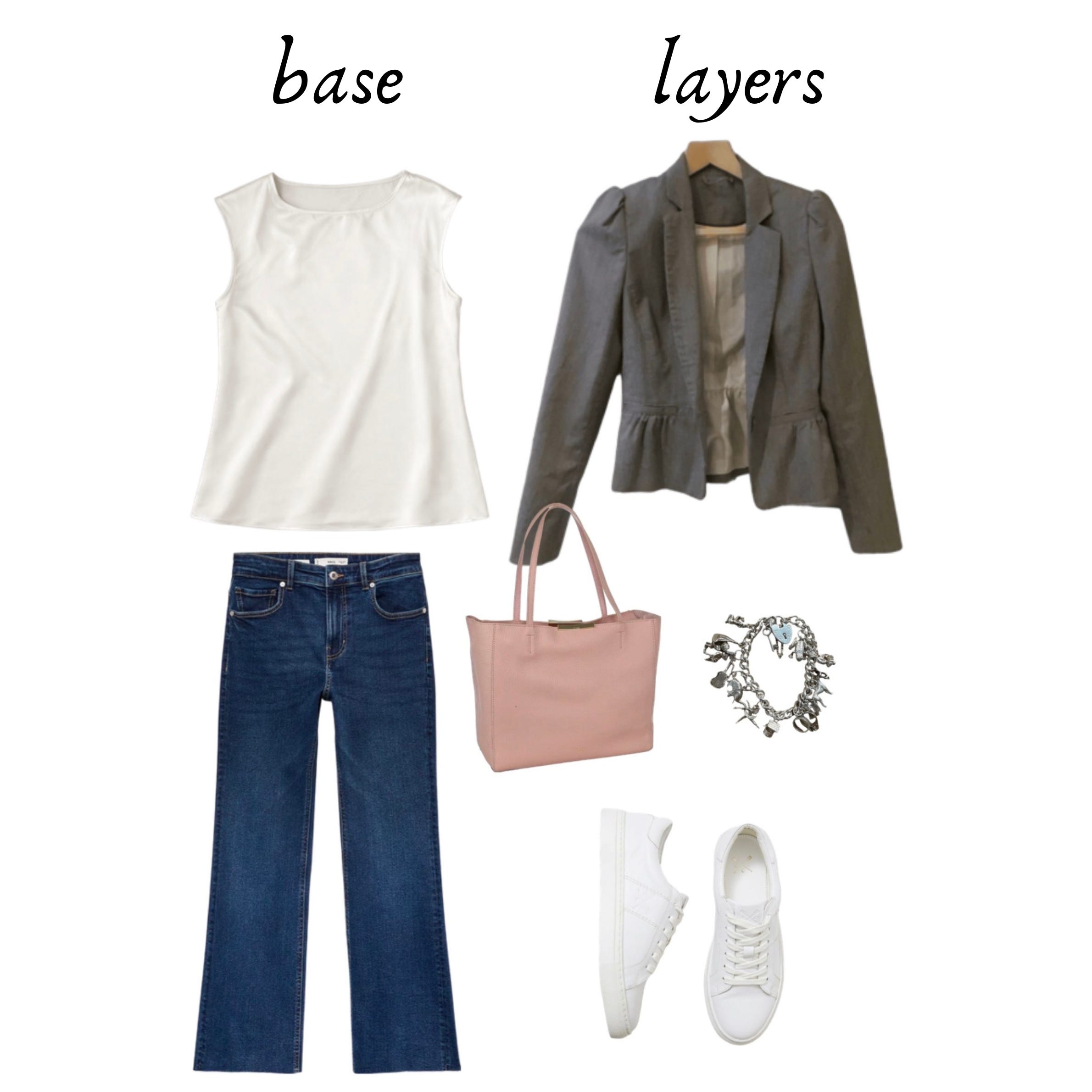
So, what actually is an outfit base? It’s essentially the top and bottom of an outfit. In very simple terms, it’s either it’s a top + trousers, top + skirt, or a dress (which I view as just top + skirt really!). It excludes jackets, jewellery, bags, shoes, sunglasses. I also chose to view cardigans as sweaters as an outerwear rather than something which could be a base item to help expand my idea of outfit variety. For many of us, top + trousers is as deep as we think about it! When you are more specific, you find that you have a lot more interest and variety than you might think at first. Top + trousers becomes top + floaty trousers / top + tailored trousers / top + baggy jeans / top and straight jeans or even blouse + floaty trousers / vest + tailored trousers / t-shirt + straight jeans.
The more I investigated, the more I realised there was a deeper system here. I have established two categories of base: silhouette and colour. Anna mixes the two up in her post, for example, “all-white base” as a colour-type base and “t-shirt and jeans” as a silhouette-type base, but I feel they are two different things altogether. After all, you may have an all-white t-shirt and jeans outfit!
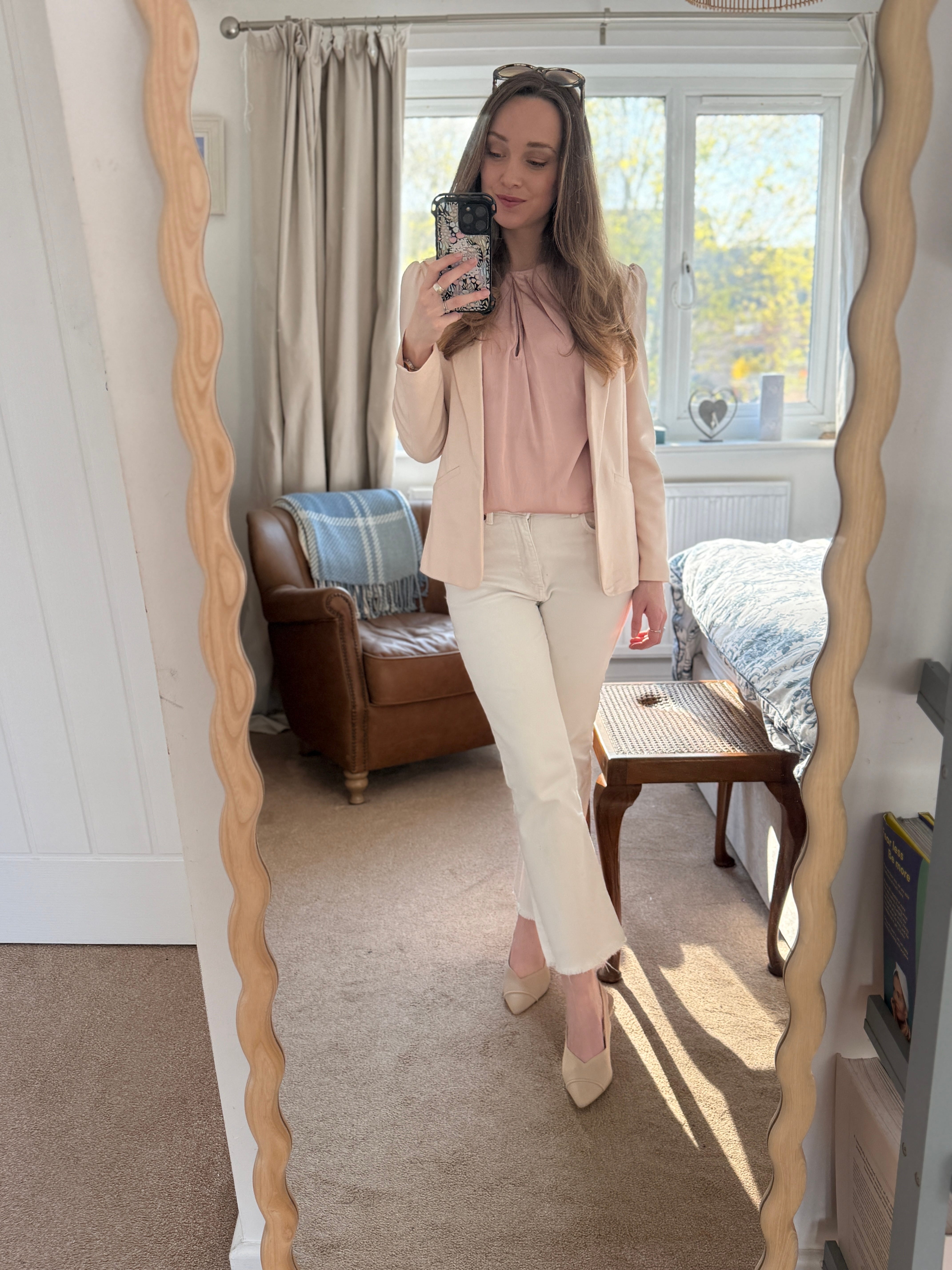
The Silhouette Base
The first step is to establish your silhouette bases. These are things like “baggy jeans + tight top” or “trousers + blouse”. These will be different for every person depending on your body type, style roots and face types.
Start by writing a list of tops and bottom types you either already have in your wardrobe or would like to have. Mine looks like this:
Tops
Loose top
Knit Tee/t-shirt/tight top
Smart top
Vest
Bottoms
Loose trousers
Bootcut comfies
Floaty skirt
Silk skirt
Jeans
Tailored trousers
Mini skirt
Pencil skirt
Don’t write every single item you have in your wardrobe e.g. short pencil skirt, long pencil skirt, cream trousers, flared plaid skirt etc because it’s too complicated to make a system from that. You want this to be a system you can use with various items in your wardrobe. Reduce them to their categories.
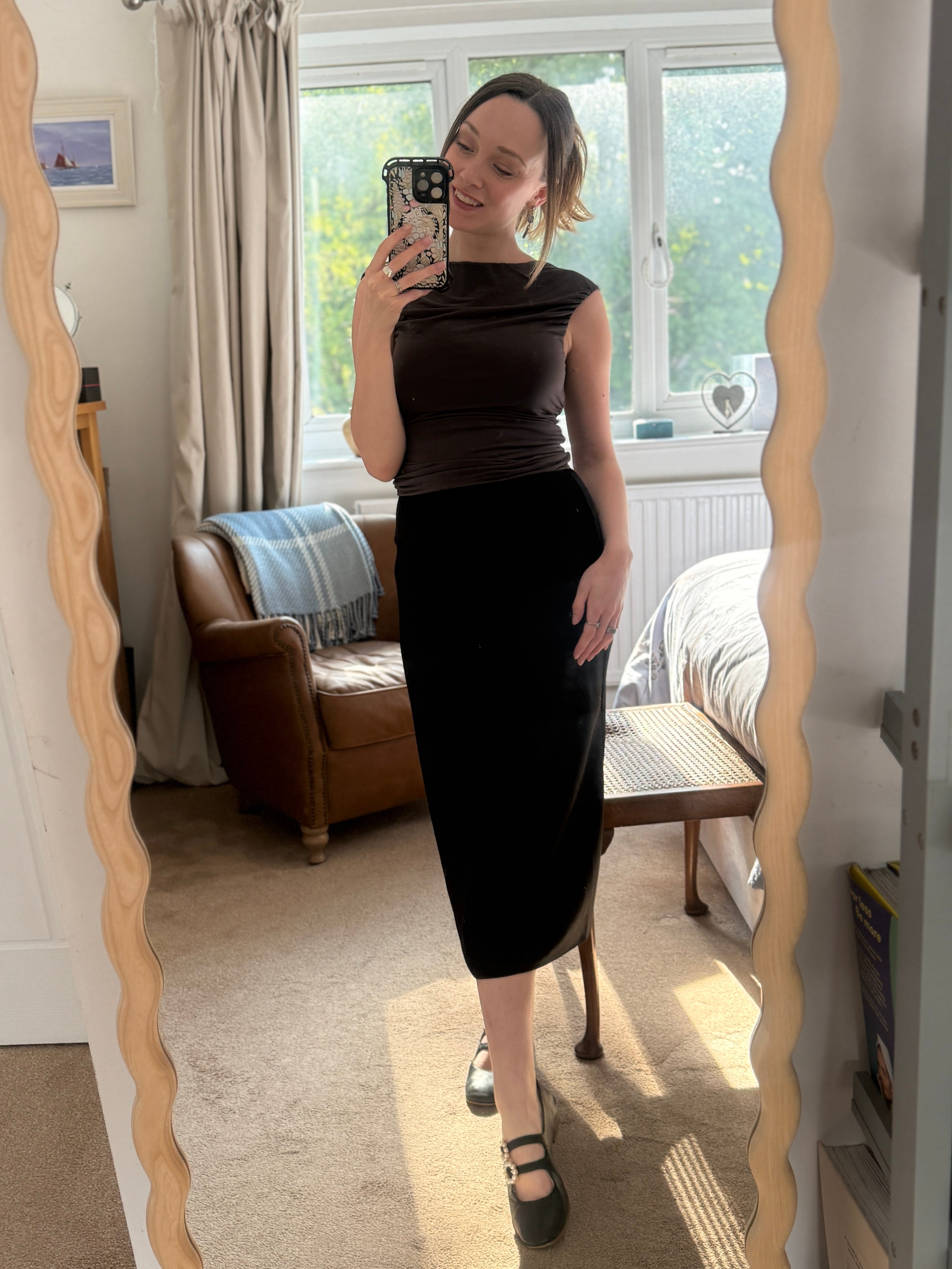
You can then write a long list of base options by combining different tops and bottoms together. I recommend going through each top type with each bottom type to see if you like the idea of it, rather than having any combination be possible as it may not work. This is mine:
Loose top + loose trousers
Loose top + floaty skirt
Loose top + jeans
Loose top + tailored trousers
Loose top + pencil skirt
T shirt + loose trousers
T shirt + bootcut comfies
T shirt + floaty skirt
T shirt + jeans
T-shirt + pencil skirt
T shirt + tailored trousers
Smart top + floaty skirt
Smart top + jeans
Smart top + silk skirt
Smart top + tailored trousers
Smart top + miniskirt
Smart top + pencil skirt
Vest + loose trousers
Vest + floaty skirt
Vest + silk skirt
Vest + jeans
Vest + tailored trousers
Vest + pencil skirt
- Remember, these aren’t shopping categories. My definition of ‘loose top’ looks very different to someone who has width! They are simply how I define things once they are in my wardrobe.
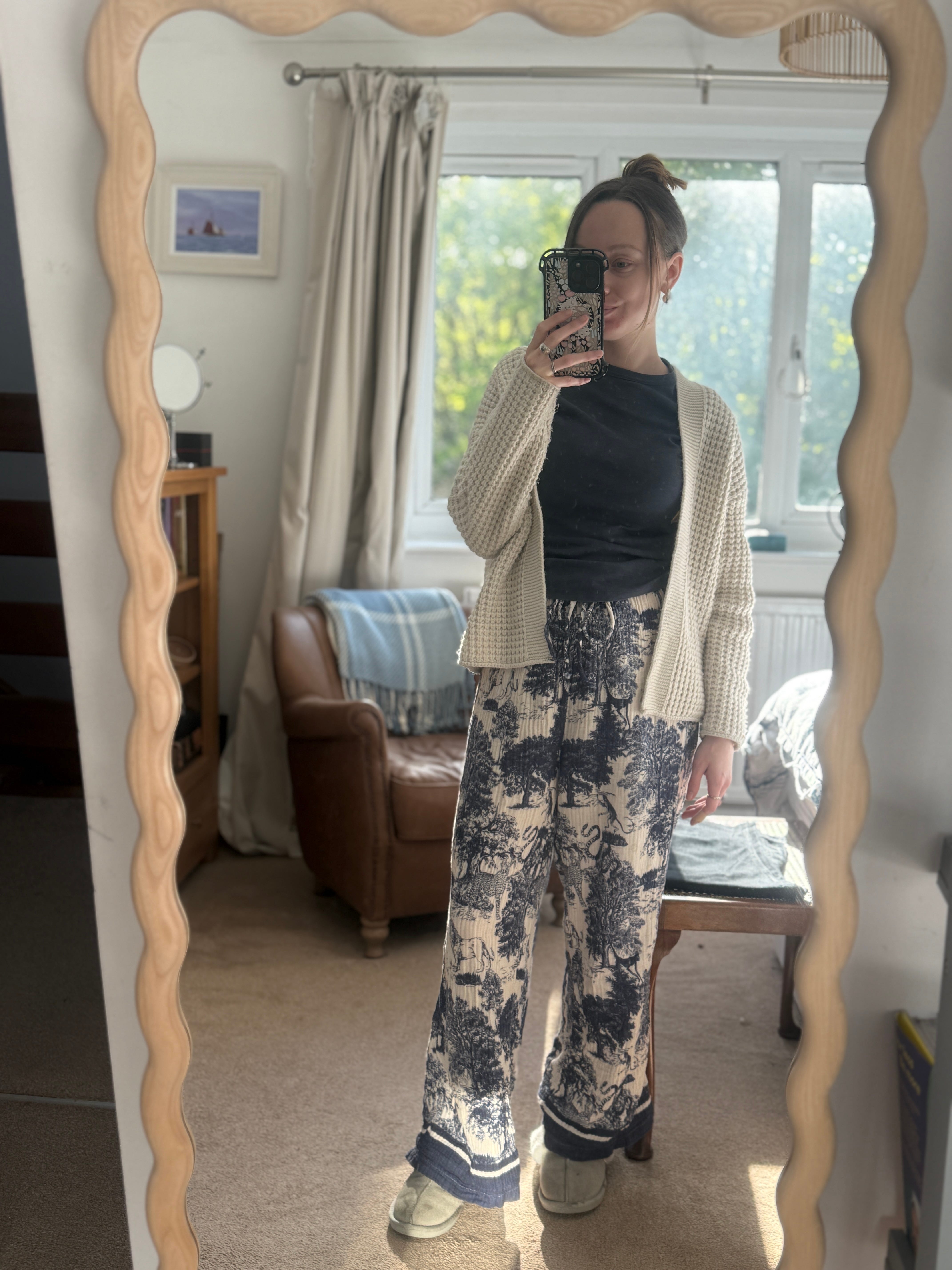
This is great and you could stop here. I found this list to be a little overwhelming, so I came up with 5 wider categories to make it a bit easier for myself:
Fluid Base — loose + loose
e.g. loose top + loose trousers, loose top + floaty skirt
Balanced Base — smart/fitted + loose
e.g. smart top + floaty skirt, t-shirt + bootcut comfies
Soft Structure Base — loose + smart/fitted
e.g. loose top + pencil skirt, vest + tailored trousers
Polished Base — elevated + elevated
e.g. smart top + pencil skirt, vest + silk skirt
High-Low Base — casual + elevated
e.g. t-shirt + pencil skirt, smart top + jeans
Once you have a base, you can start to add your layering pieces. Your list may look a little different to mine, but this should give you an idea of the kinds of things you could include:
Cardigans
Sweaters
Jackets
Blazers
Coats
Jewellery
Flats
Wedges
Sandals
Heels
Day bags
Evening bags
Scarves
The Colour Base
Your colour bases are an alternative way to come up with your bases - or you can combine this with your silhouette base. Just like Anna’s “all white” or “all black” base, colour can be a great jumping off point for a look.
Start by writing a list of colours you have or would like to have in your wardrobe. I found it helpful to split into my neutrals and colours:
Neutrals
Navy
Ivory
Stone
Grey
Taupe
Brown
Colours
Silver
Pink
Rose
Soft blue
Soft green
Mauve
Soft yellow
Purple
I then went through every single possible combination of one-two colours and wrote out which ones I actually wanted. For example, I established that green + yellow as a base was not for me, even though I might consider a subtle yellow accent in a base with green in. This list feels insanely long to share, so I’ll just share some examples!
All navy
Navy + soft pink
Navy + rose
Navy + ivory
Ivory + rose
Ivory + soft blue
Grey + mauve
Grey + purple
All pink
Pink + rose
Pink + blue
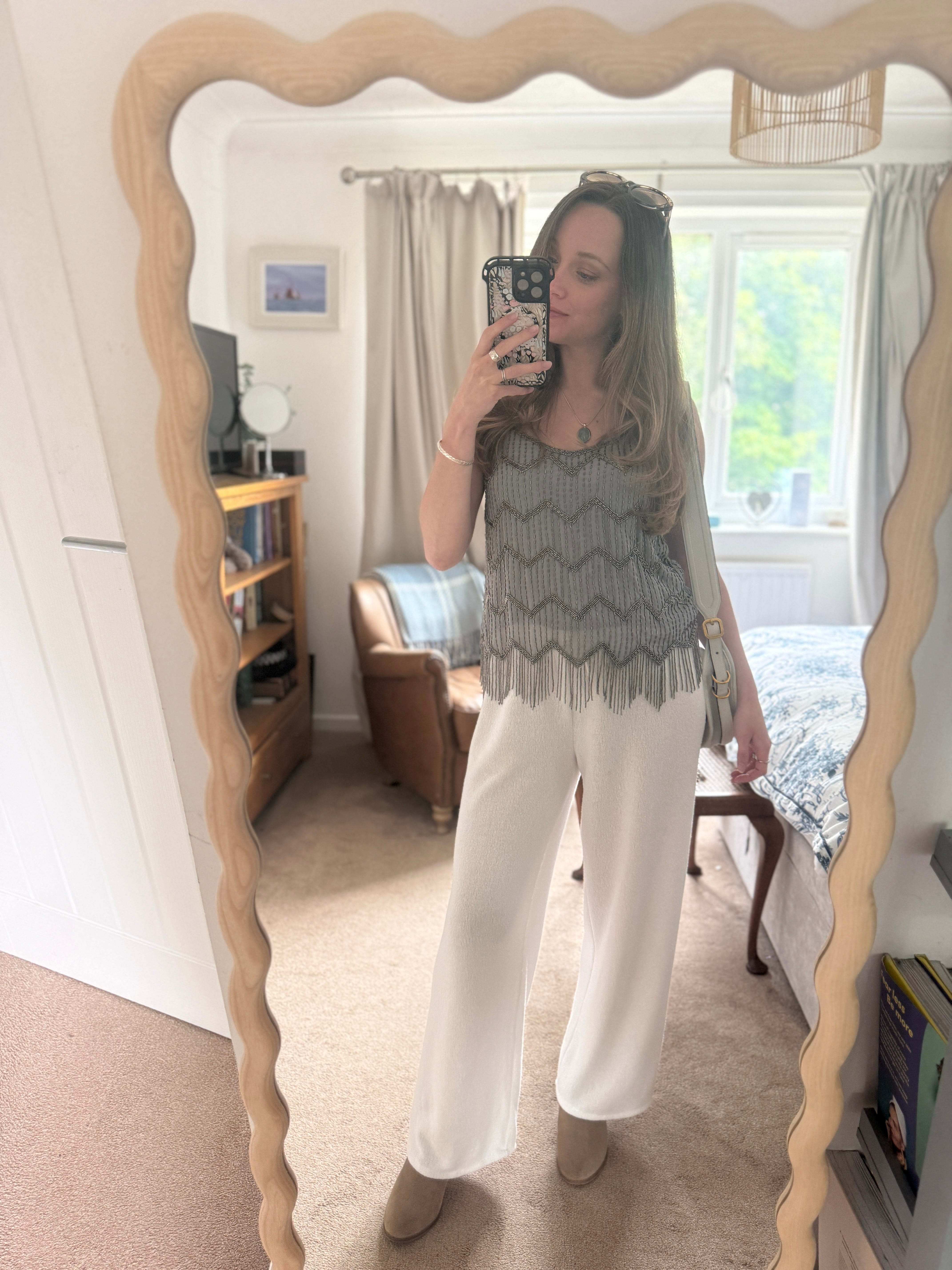
For an advanced step, you could input your list to chat gpt and get to highlight which accents would be best for each base based on which colours you have already paired together, here are some examples of what that looked like for me:
Navy + pink
Ivory, stone, grey, silver, rose, soft blue, green, mauve, purple
Navy + rose
Ivory, stone, grey, silver, pink, soft blue, green, mauve
Navy + ivory
Stone, grey, silver, pink, rose, soft blue, green, mauve
Again, at this point my list seemed a little too overwhelming to be useful on a day to day basis, so I reduced it down to four types:
1. Monochrome
One colour head-to-toe.
navy top + navy trousers
ivory top + ivory skirt
brown top + brown trousers
pink top + pink skirt
2. Tonal
Colours from the same family, but not identical.
ivory + stone
taupe + brown
pink + rose
mauve + purple
navy + soft blue
3. Low contrast
Different colours, but similar softness/depth.
ivory + soft pink
stone + soft blue
taupe + mauve
brown + rose
grey + soft blue
4. Colour pop
A higher contrast base with one clearer colour moment.
navy + pink
ivory + rose
brown + soft blue
ivory + mauve
Again, yours may look a little different depending on your season and style roots!
There is so much fun you can have from here (especially if you input this into your chat gpt). You can come up with capsule wardrobes based on the bases you would like, think about a reduced colour palette for your wardrobe, create a shopping list and more. The best bit though is having a practice coming up with different outfits now you have your new system 😉


I struggle with my base. I almost always wear jeans and a T-shirt but I find this really boring. Bottoms aren't as big of an issue as tops though. I need width accommodation for my shoulders but the rest of my torso is tiny. A medium sized top will fit my width great but it makes me look really wide through the ribs and belly since nothing seems to be tailored anymore unless it's cropped. I already have a short torso so cropped tops exaggerate the look which I don't love. I wish it was easier to find tops in the fabrics, colors and cuts I'm looking for.
This is something I’ve actually been thinking about already, but you made it more concrete! So useful!